Complete DIY Sprinkler System Installation Guide Using Lowe's Components

Welcome to Your DIY Installation Journey

Installing your own sprinkler system is a rewarding project that can save you thousands of dollars while giving you complete control over your lawn's irrigation. This comprehensive guide will walk you through every step of the installation process using quality components available at Lowe's.

With the right parts, proper planning, and these detailed instructions, you'll create a professional-grade irrigation system that will keep your lawn healthy for years to come.

🏡 Find everything you need for your DIY sprinkler system at Lowe's
Shop All Sprinkler Parts ↗
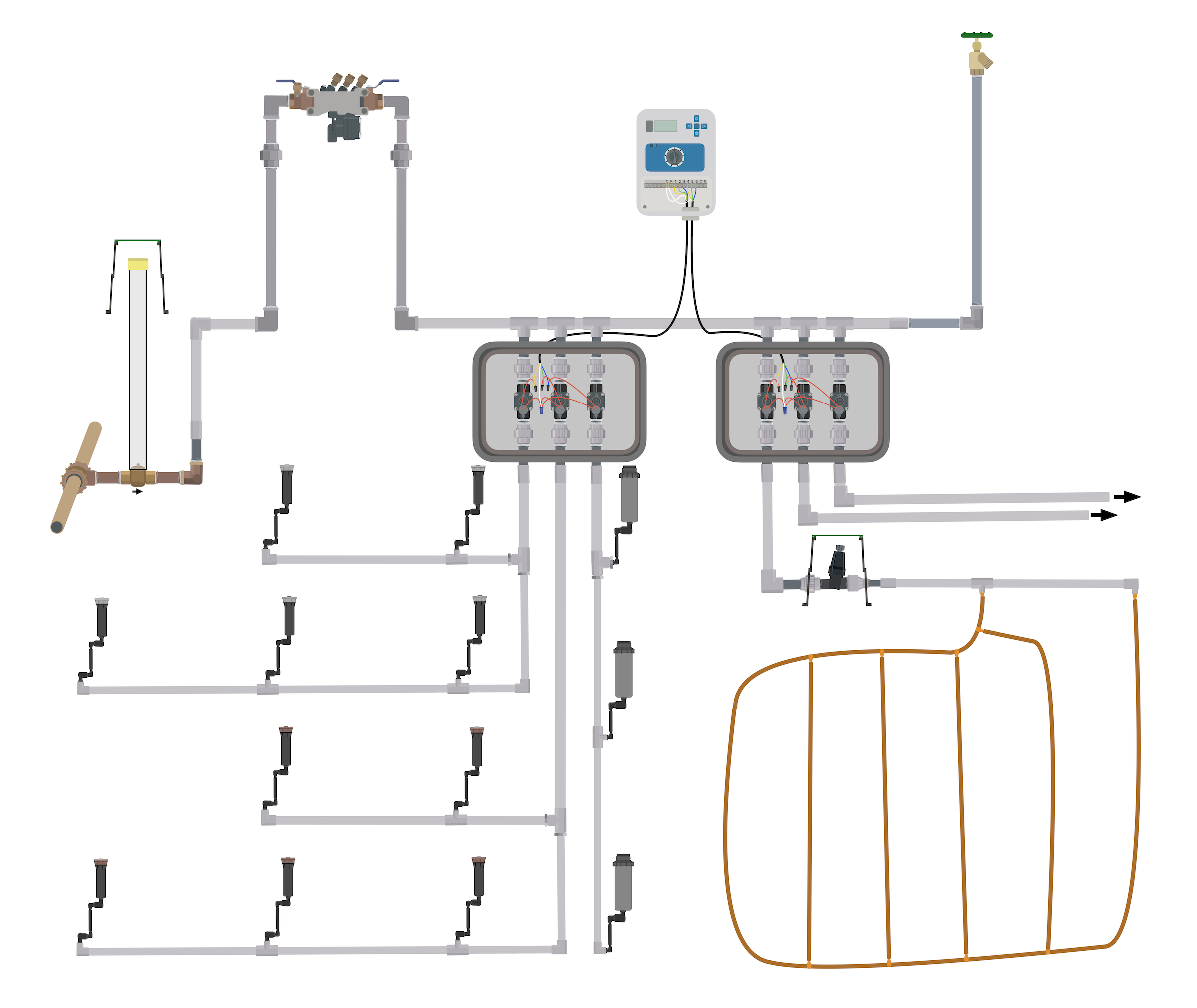
Complete sprinkler system layout diagram showing all components

Understanding Your Complete System

Before you begin, let's review the key components you'll be installing from Lowe's:

  1. Backflow Preventer: Protects your drinking water (PVB or RP type)
  2. Valve Manifold: Controls water flow to each zone
  3. Main Line: 1" PVC Schedule 40 pipe from backflow to valves
  4. Lateral Lines: 3/4" PVC pipes delivering water to heads
  5. Swing Joints: Flexible connections for sprinkler heads
  6. Pop-up Spray Heads: For smaller areas (Rain Bird or Hunter)
  7. Rotor Heads: For larger coverage areas
  8. Irrigation Wire: Multi-strand wire for valve control
  9. Smart Controller: Programs watering schedules efficiently
Sprinkler layout pattern examples

Step 1: Planning Your System Layout

Critical Design Principles

Head-to-Head Coverage: This is the most important concept in sprinkler design. Every area must be watered by at least 2 sprinkler heads, with each head throwing water far enough to reach the adjacent heads. Understand head to head coverage better, by using My Sprinkler Spacing Visualizer

Layout Process

  1. Walk your property with a measuring wheel or measuring tape
  2. Mark corners and edges with flags
  3. Measure distances between flags
  4. Select appropriate head types based on distances
  5. Draw your layout on graph paper or use the My Sprinkler System Design Tool
📏 Shop measuring tools at Lowe's
Measurement Tools ↗
Square pattern sprinkler layout

Layout Patterns Explained

Square Pattern (Most Common)

The square pattern is simpler to design and install, making it ideal for residential installations. Heads are placed in a grid pattern with equal spacing.

Triangle/Diamond Pattern (More Efficient)

While more complex to lay out, the triangle pattern provides better coverage with fewer dry spots and uses water more efficiently.

Understand head to head coverage better, by using My Sprinkler Spacing Visualizer

Pro Tip: Use rotors for areas over 15 feet, and spray heads for smaller areas. This ensures optimal coverage and water efficiency.

💦 Shop Rain Bird and Hunter sprinkler heads at Lowe's
Sprinkler Heads ↗
Professional irrigation system detail diagram

Irrigation Detail Generator: Create professional system diagrams with multiple pipe sizes, customize parts, and export to PNG. Perfect for visualizing your swing joints and valve manifolds.

Generate Details →
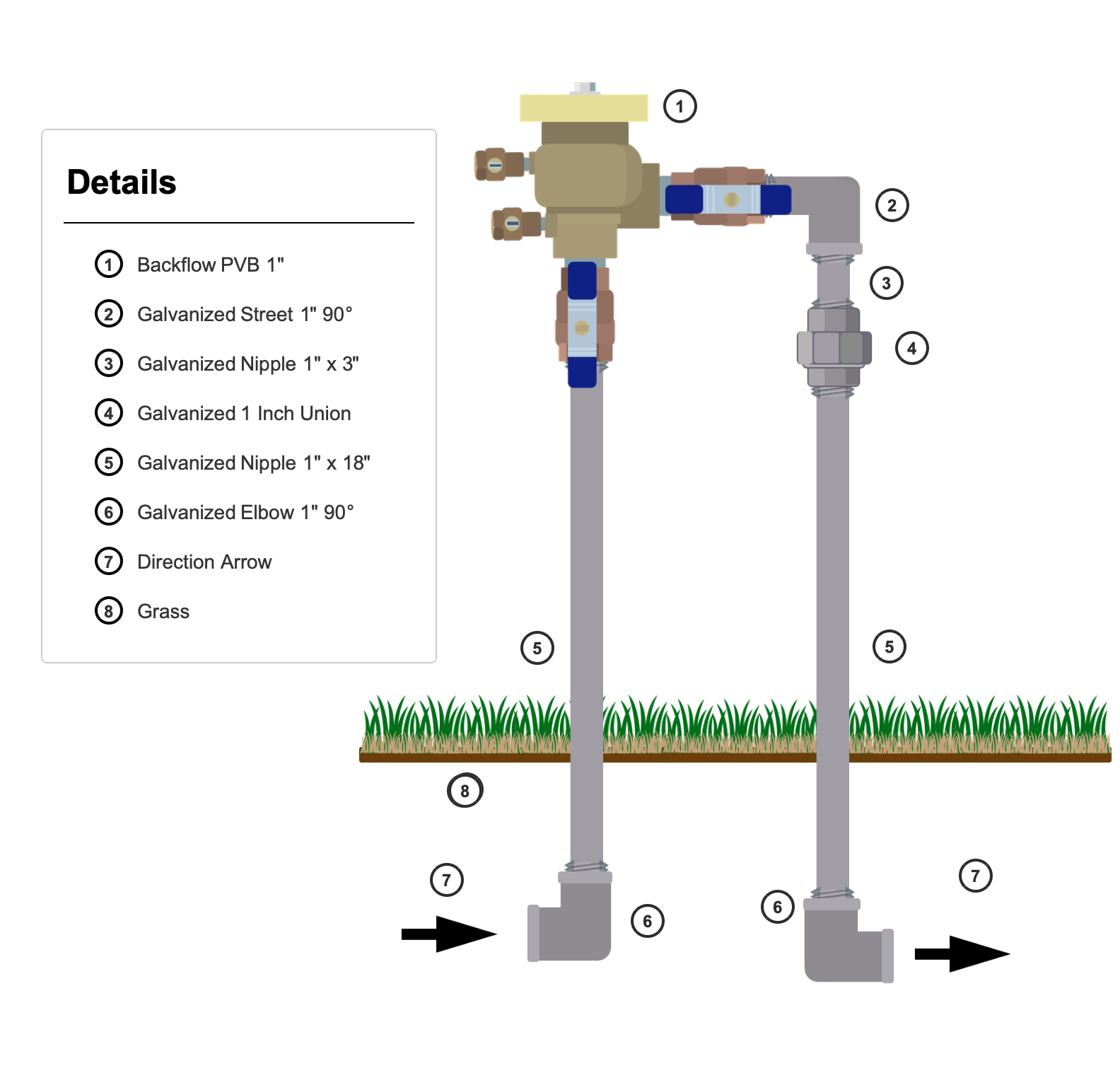
PVB backflow preventer diagram

Step 2: Installing Your Backflow Preventer

Why You Need a Backflow Preventer

A backflow preventer is required by law for any sprinkler system connected to drinking water. It prevents contaminated water from flowing backwards into your home's water supply.

Choosing Between PVB and RP

PVB (Pressure Vacuum Breaker):

  • Most popular choice for residential systems
  • Easy to install and cost-effective
  • Must be installed 12" higher than the highest sprinkler head
  • Available at Lowe's in 3/4" and 1" sizes

RP (Reduced Pressure Assembly):

  • Provides maximum protection
  • Can be installed below ground in a vault
  • Required for systems with chemical injectors
  • More expensive but superior protection
🛡️ Shop code-compliant backflow preventers at Lowe's
Backflow Preventers ↗
RP backflow preventer diagram

Backflow Preventer Installation

Installation Steps from Lowe's Parts

  1. Connect backflow to your main water supply line using Teflon tape
  2. Install shutoff valves before and after the backflow
  3. For PVB: Mount on a vertical pipe at proper height
  4. For RP: Can be installed horizontally or in underground vault
  5. Test all connections for leaks before proceeding

Required Tools from Lowe's

  • Teflon tape or pipe thread sealant
  • Pipe wrenches (two)
  • Level for proper alignment
  • PVC primer and cement for connections
🛡️ Shop code-compliant backflow preventers at Lowe's

💧 Measure Your Water Flow (GPM)

Bucket test method for measuring GPM

Before you purchase parts, you need to know your water flow rate! Use our free GPM Measurement Tool with the simple bucket test method. Just fill a 5-gallon bucket while timing it, and the calculator does the rest.

Your GPM determines how many sprinkler heads you can run per zone. This is critical for proper system design!

Measure Your GPM →
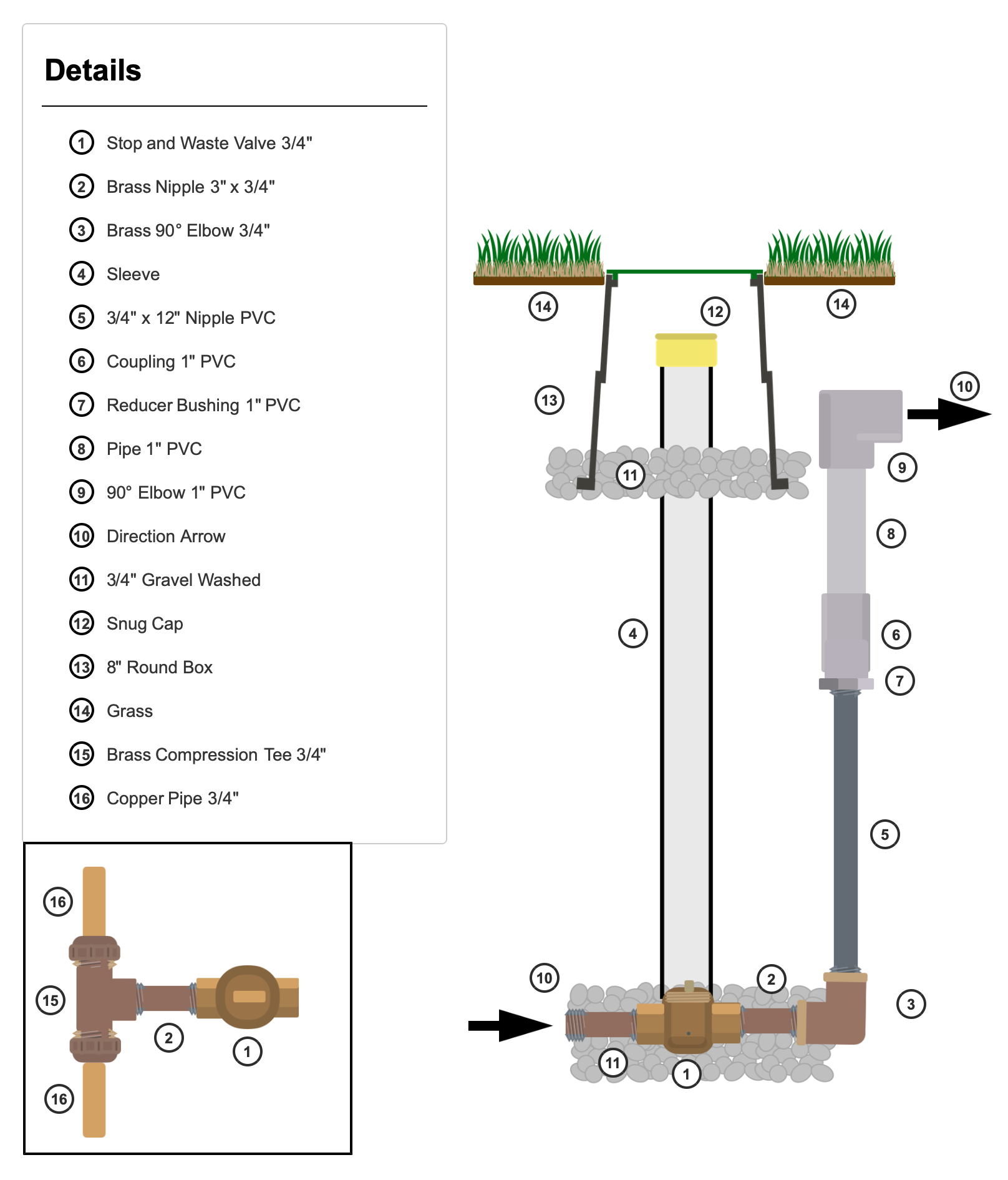
Stop and Waste valve schematic

Step 2.5: Installing Stop and Waste Valve

What is a Stop and Waste Valve?

A stop and waste valve is a crucial component for sprinkler systems in areas with freezing temperatures. It serves as a shutoff point that automatically drains water from the downstream pipes when closed, preventing freeze damage to your irrigation system.

Why Install Outside vs Inside?

Stop and waste valves are installed outside near your property's water connection (typically near the meter or curb) rather than inside your home for several important reasons:

  • Drainage to Backflow Preventer: Installed below the frost line, it drains all water from sprinkler pipes, valves, and heads up to the backflow preventer
  • Prevents Indoor Flooding: The "waste" function drains water into the ground - you don't want this happening in your basement!
  • Increased Flow & Cost Savings: Installing at the property line reduces friction loss from your home, giving you more available GPM. This means you can run more heads per zone and may need fewer total zones, saving hundreds in installation costs
  • Freeze Protection: By being underground at the property line, water drains away from both your house and the irrigation system
  • Easy Access: Located at the start of your irrigation system for convenient seasonal shutoff
🚰 Shop Stop and Waste Installation Parts at Lowe's
Stop & Waste Parts ↗
Stop and Waste valve installation

Stop and Waste Installation Steps

Installation Process

  1. Locate Connection Point: Find your main water line or meter connection point
  2. Dig to Proper Depth: Excavate below the frost line for your area (typically 18-36 inches deep)
  3. Install Valve: Connect the valve to your water supply line using appropriate fittings
  4. Add Gravel Base: Place 6-12 inches of gravel around valve for drainage
  5. Install Access Sleve: Use a 2 inch diameter pipe running from the valve top to the access box (depicted in picture)
  6. Backfill and Test: Fill trench and test valve operation
  7. Install Access Box: Place a valve box over the installation for easy seasonal access

Why Does It "Waste" Water?

The term "waste" refers to the small drain port that automatically opens when you close the valve. This allows water in the downstream pipes to drain into the surrounding gravel and soil. While it may seem wasteful, this feature:

  • Prevents thousands of dollars in freeze damage
  • Only drains the water in the pipes (minimal amount)
  • Happens only during seasonal shutdown
  • Is essential for cold climate irrigation systems

Pro Tip: After installation, measure your GPM at the stop and waste location rather than from your house. This gives a more accurate reading for system design since it accounts for line loss from your house to the irrigation start point.

🚰 Shop Stop and Waste Installation Parts at Lowe's
Stop & Waste Parts ↗
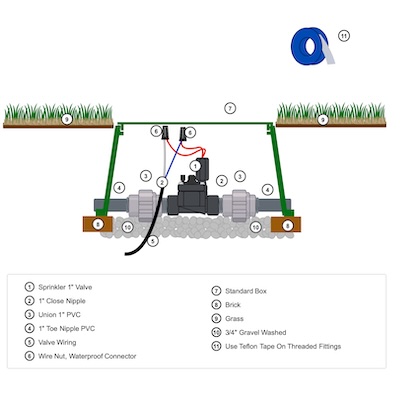
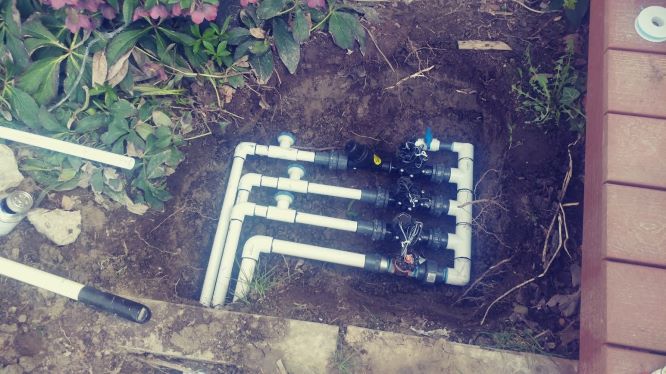
Orbit preassembled valve manifold system

Step 3: Installing Orbit Preassembled Manifold System from Lowe's

Why Choose Orbit Preassembled Manifolds?

Skip the complex assembly! Orbit's preassembled manifold systems available at Lowe's are fully engineered and ready to install. Each valve controls one zone, and most residential systems need 2-6 valves depending on property size.

Orbit Manifold System Benefits

  • Installs in Minutes: Hand-tighten connections, no tools required!
  • Premium L-Series Valves: 24 VAC solenoids compatible with all major controllers
  • Jar-Top Design: Easy valve maintenance without disassembly
  • Special Swivel Unions: Create secure, watertight seals
  • Easy Expansion: Add or replace valves by simply unthreading swivels
  • Built Tough: UV-resistant, withstands 600 PSI burst pressure
  • Versatile: Works with both 3/4" and 1" PVC or poly pipe systems
🔩 Shop Orbit Preassembled Manifold Systems at Lowe's
Orbit Manifolds ↗

Orbit Manifold Installation Steps

Quick Installation Process

  1. Select Your System: Choose manifold with correct number of ports for your zones
  2. Prepare Valve Box: Get box from Lowe's large enough for manifold plus 6" clearance
  3. Set Depth: Position box so valve tops are 6-8" below grade
  4. Create Gravel Base: Place 2" of gravel for stability and drainage
  5. Connect Inlet: Attach main line from backflow to manifold inlet using included adapters
  6. Hand-Tighten Swivels: No tools needed - just hand-tighten special swivel unions
  7. Connect Zone Lines: Attach 3/4" or 1" lateral lines to each valve outlet
  8. Test Connections: Turn on water briefly to check for leaks

What's Included with Orbit Manifolds

  • Preassembled manifold with premium L-Series valves
  • PVC pipe adapters for 3/4" and 1" connections
  • Easy Wire connectors for simple timer hookup
  • Easy Seal waterproof wire nuts for outdoor durability
  • Installation instructions
🔩 Shop Orbit Manifold Essential Components at Lowe's — Durable valves and fittings for professional setups
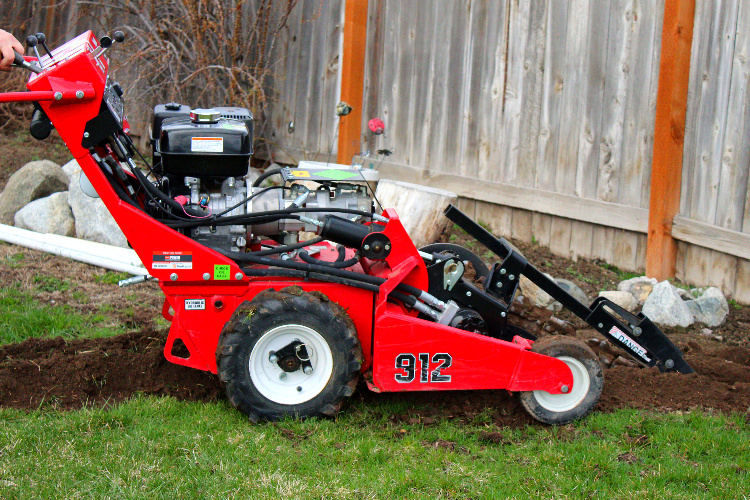
Trenching for sprinkler pipes

Step 4: Installing PVC Lateral Lines

Safety First: Call Before You Dig

CRITICAL: Always call 811 (or visit Blue Stakes) at least 2-3 days before digging. This free service locates underground utilities and can prevent serious injury or property damage.

Trenching Depth Guidelines

  • Main Lines (1"): 10-12 inches deep
  • Lateral Lines (3/4"): 8-10 inches deep
  • Near Utilities: Hand dig within 24" of marked lines and follow your Blue Stakes guidelines

Trenching Methods

  • Manual: Garden spade for small yards (under 2,000 sq ft)
  • Trencher Rental
Zone lateral piping layout

PVC Pipe Layout and Installation

Pipe Sizing from Lowe's

Main Line (Backflow to Valves): Use 1" Schedule 40 PVC for systems 9-16 GPM

Lateral Lines (Valve to Heads):

  • Start with 1" pipe from valve
  • Reduce to 3/4" after first tee or after 1/3 of heads
  • Continue 3/4" to all swing joint connections

Gluing PVC Pipes

  1. Dry fit first: Assemble without glue to verify layout
  2. Mark alignment: Draw lines across joints for proper orientation
  3. Clean and deburr: Remove dirt and smooth cut edges
  4. Apply primer: Purple primer on both surfaces (required for pressure lines)
  5. Apply cement: Blue PVC cement liberally to both surfaces
  6. Quick assembly: Join pieces within 30 seconds
  7. Hold firm: Maintain pressure for 30 seconds
  8. Cure time: Generally 24 hours for full strengh, but often testable after 2 hours
🛠️ Shop Essential Sprinkler Tools at Lowe's — The core toolkit for repairs and system upgrades
🩹 Shop PVC cement and primer at Lowe's
PVC Glue & Primer ↗

🧮 Calculate Your System Requirements

Complete sprinkler valve installation

Sprinkler System Calculator: Get accurate GPM calculations, complete parts lists, and material estimates for your entire system. Input your zones and head types to generate a comprehensive shopping list for Lowe's!

Calculate Parts List →

Friction Loss Calculator: Determine pressure loss in your pipes based on flow rate, pipe size, and length. Critical for ensuring proper pressure at each sprinkler head!

Calculate Friction Loss →
Swing joint components from Lowe's

Step 5: Building Professional Swing Joints

Why Use Swing Joints?

Swing joints are essential for professional installations. They provide flexibility that prevents head damage from foot traffic, mowing, and ground settling. This small investment saves countless repairs.

Swing Joint Benefits

  • Prevents broken sprinkler heads from being stepped on
  • Allows easy height adjustment after installation
  • Compensates for ground settling over time
  • Makes head replacement simple without digging
  • Reduces stress on lateral pipe connections

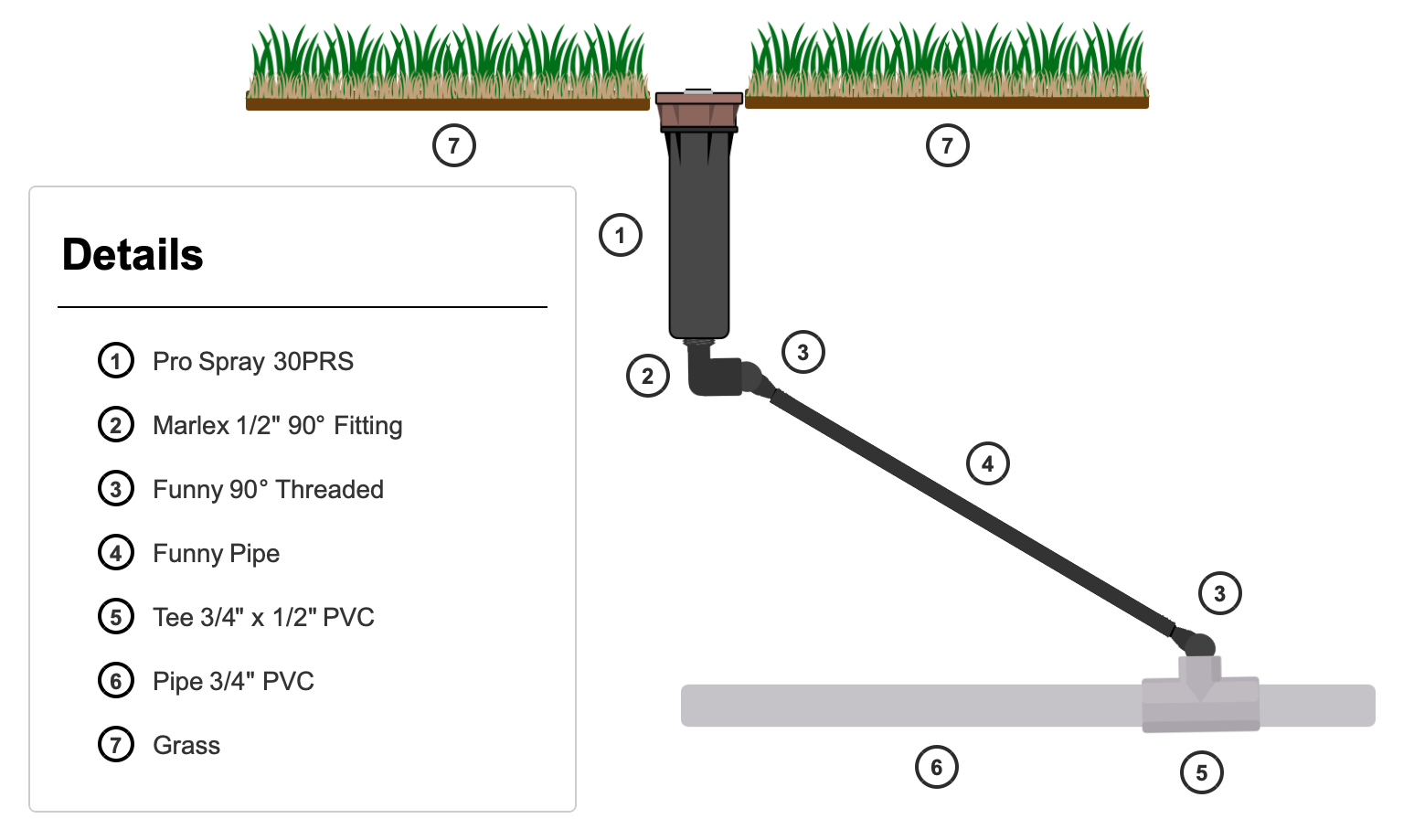
Parts List from Lowe's - Pop-up Swing Joint

  1. 3/4" x 1/2" threaded PVC tee
  2. 1/2" funny elbow (barbed fitting)
  3. 1/2" funny pipe (flex tubing) - 6" to 18" length
  4. 1/2" marlex elbow (rigid elbow)
  5. 1/2" funny elbow for head connection
  6. Pop-up spray head (Rain Bird or Hunter)
Pop-up sprinkler swing joint assembly diagram

Pop-up Swing Joint Assembly

Step-by-Step Assembly (Using Lowe's Parts)

  1. Install Tee: Glue 3/4" x 1/2" threaded tee into lateral line at head location
  2. Add Bottom Elbow: Screw 1/2" funny elbow into tee threads (use Teflon tape)
  3. Cut Funny Pipe: Cut 1/2" funny pipe to desired length (typically 6-12 inches)
  4. Connect Pipe: Push funny pipe firmly onto bottom elbow barb
  5. Add Top Elbow: Push 1/2" or 3/4" funny elbow onto top of funny pipe
  6. Add Marlex: Screw 1/2" or 3/4" marlex elbow onto funny elbow threads
  7. Install Head: Screw sprinkler head onto top marlex elbow

Length Guidelines

  • Short runs (6-8"): Can handle up to 5 GPM heads
  • Medium runs (10-14"): Ok up to 4 GPM spray heads
  • Long runs (over 18"): Limit to 3 GPM maximum
⚙️ Shop Essential Sprinkler Tools & Components at Lowe's — Quality parts for irrigation pros and DIY enthusiasts

Step 6: Installing Sprinkler Heads from Lowe's

Pop-up Spray Head and Rotor Installation

Rain Bird and Hunter pop-up heads available at Lowe's are perfect for smaller areas (5-15 foot radius):

Installation Steps

  1. Screw head onto swing joint (hand tight only)
  2. Adjust height so top of head is level with soil
  3. Backfill around head, tamping soil firmly
  4. Adjust arc and radius according to manufacturer instructions
  5. Test spray pattern before final backfill
💦 Shop replacement sprinkler heads at Lowe's
🌧️ Shop Rain Bird high-efficiency nozzles at Lowe's
Rain Bird VAN ↗

Head Spacing and Coverage Tips

Proper Spacing Guidelines

Head Type Typical Spacing
Spray Heads (5-15') Equal to radius
Rotary Nozzles (15-25') Equal to radius
Rotors (20-50') 80-90% of radius

Troubleshooting Coverage

  • Dry spots: Heads too far apart or low pressure
  • Oversaturated areas: Too many heads overlapping
  • Uneven coverage: Mixed head types in same zone
  • Misting: Pressure too high (install pressure regulator)
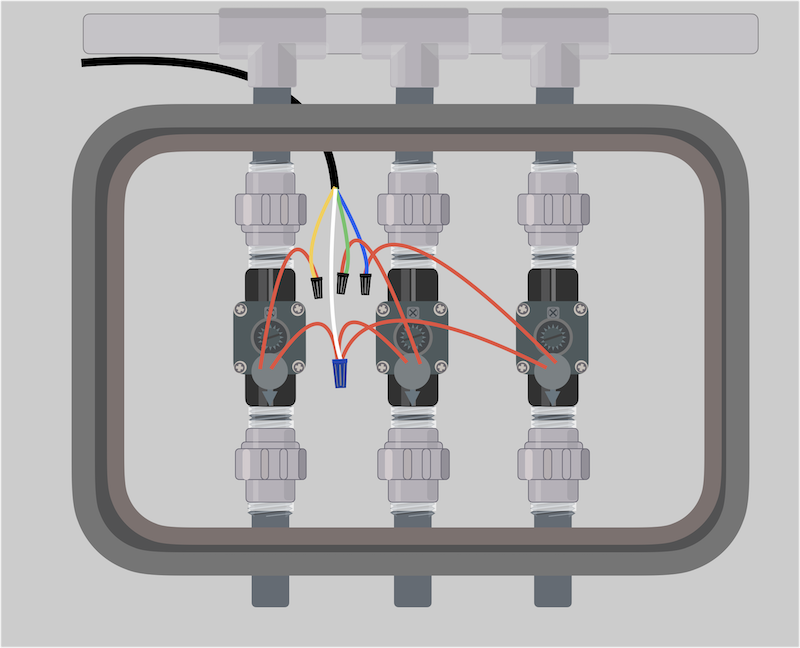
Sprinkler valve wiring with color-coded wires

Step 7: Wiring Your System with Lowe's Components

Understanding Irrigation Wire

Purchase multi-strand irrigation wire from Lowe's. Common sizes are 3-wire, 5-wire, 7-wire, and 9-wire bundles. Choose based on number of zones plus one for common.

Wire Color Coding System

Common Wire: Choose one color (typically white) to connect to ALL valves. This wire returns to the "C" terminal on your controller.

Zone Wires: Use a different color for each valve:

  1. Zone 1: Red
  2. Zone 2: Yellow
  3. Zone 3: Green
  4. Zone 4: Orange
  5. Zone 5: Blue
  6. Zone 6: Purple

Wire Installation Steps

  1. Run from Controller: Trench wire from controller location to valve box (can share trench with main line)
  2. Leave Slack: Provide 12" extra wire at each connection point
  3. Strip Wire: Remove 1/2" insulation from each wire end
  4. Connect to Valves: One common wire to each valve + one unique zone wire per valve
  5. Use Wire Nuts: Waterproof wire connectors from Lowe's
  6. Label Wires: Mark each zone wire at controller end
Shop Sprinkler Automation Essentials at Lowe's — Timers, sensors, and smart devices for hands-free watering
Automation ↗

Wiring Best Practices

Professional Wiring Tips

  • Depth: Bury wire 6-8 inches deep (can run in PVC trench)
  • Protection: Use PVC conduit where wire crosses driveways
  • Connections: Use grease-filled wire nuts for moisture protection
  • Testing: Test each valve with controller before backfilling
  • Documentation: Take photos of wire runs before covering
Shop Sprinkler Automation Essentials at Lowe's — Timers, sensors, and smart devices for hands-free watering
Smart irrigation controller from Lowe's

Step 8: Installing Your Smart Controller

Why Choose a Smart Controller from Lowe's?

Smart controllers available at Lowe's (Rain Bird, Orbit, Rachio) can save up to 50% on water usage and qualify for rebates up to $250 in many areas!

Smart Controller Benefits

  • Weather-based watering adjustments
  • Remote control via smartphone app
  • Seasonal schedule modifications
  • Rain and freeze delay features
  • Flow monitoring (some models)
  • EPA WaterSense certified for rebates

Controller Selection Guide

Basic Timer: $40-80, manual programming

Smart WiFi Controller: $150-250, weather-based, app control

Professional Smart Controller: $250-400, advanced features, flow monitoring

💧 Shop Smart Controllers at Lowe's — Save 50% on water + get $250 rebates!
Smart Controllers ↗

Controller Installation Steps

Mounting Your Controller

  1. Location: Choose protected area (garage, covered patio, utility room)
  2. Power: Near 120V outlet
  3. WiFi: Within range of home WiFi for smart controllers
  4. Height: Mount 4-5 feet high for easy access
  5. Mounting: Use screws into studs or wall anchors

Wiring the Controller

  1. Strip 1/2" from each wire end
  2. Connect common wire(s) to "C" or "COM" terminal
  3. Connect each zone wire to numbered terminals (1, 2, 3, etc.)
  4. Tighten terminal screws firmly
  5. Tuck excess wire into controller cabinet
  6. Close and lock controller door

Initial Programming

  • Set current date and time
  • Enter your zip code (for weather data)
  • Configure each zone (spray, rotor, drip, etc.)
  • Set watering days based on local restrictions
  • Program start times (typically 2-6 AM)
  • Test each zone to verify operation

⏱️ Calculate Optimal Zone Runtimes

Smart irrigation controller timer

Zone Run Time Calculator: Don't guess at watering times! Calculate precise runtimes for spray heads, rotors, MP Rotators, and drip systems. Optimize your irrigation for healthy lawns while conserving water.

Get exact watering schedules based on your head types, coverage, and soil conditions.

Calculate Zone Runtimes →

System Testing and Troubleshooting

Pre-Backfill Testing

CRITICAL: Test your entire system before backfilling trenches!

  1. Pressurize system and check for leaks at all connections
  2. Test each valve manually at the manifold
  3. Test each zone from the controller
  4. Verify all heads pop up and rotate properly
  5. Check coverage patterns for gaps or overspray
  6. Adjust head arcs and radius as needed
  7. Mark any heads that need adjustment

Common Issues and Solutions

Low Pressure:

  • Check that backflow valves are fully open
  • Verify no leaks in main line
  • Too many heads on one zone - redesign zones

Valve Won't Turn On:

  • Check wire connections at valve and controller
  • Test valve manually using solenoid or bleeder
  • Replace faulty valve solenoid if needed

Uneven Coverage:

  • Adjust nozzles to match coverage radius
  • Add or relocate heads to fill gaps
  • Check for clogged nozzles

Final Steps and Maintenance

Completing Your Installation

  1. Backfill Trenches: Replace soil, tamp firmly, grade level with surroundings
  2. Replace Sod: Re-lay sod or seed disturbed areas
  3. Final Adjustments: Fine-tune all head coverage after settling
  4. Programming: Set optimal watering schedule
  5. Documentation: Keep photos and notes of system layout

Seasonal Maintenance Guide

Spring Startup:

  • Slowly turn on water supply
  • Check for winter damage
  • Clean or replace clogged nozzles
  • Reprogram controller for new season

Summer Monitoring:

  • Inspect coverage monthly
  • Adjust for plant growth
  • Check for leaks or broken heads
  • Monitor water bill for unusual usage

Fall Winterization:

  • Turn off water supply
  • Drain backflow preventer
  • Open all valves to drain
  • Blow out lines in freezing climates
  • Set controller to "off" mode

Cost Savings with DIY Installation

Professional vs. DIY Costs

Professional Installation: $5,000 - $10,000 for average yard

DIY with Lowe's Parts: $1,500 - $3,500 in materials

Your Savings: $3,500 - $6,500+

Typical Material Costs from Lowe's

  • Backflow Preventer: $150-250
  • Valves (3 zones): $120-180
  • PVC Pipes & Fittings: $450-1000
  • Sprinkler Heads (20): $250-500
  • Wire & Connectors: $20-50
  • Smart Controller: $150-300
  • Tools (if needed): $100-200

Additional Savings

  • Smart controller water savings: $300-600/year
  • Utility rebates: $50-250
  • Knowledge for future repairs: Priceless
🚀
Start Your DIY Sprinkler System Today
Get everything you need at Lowe's - Quality parts, expert advice, convenient shopping
Shop Lowe's Now ↗