Winterizing Sprinkler Valves - Complete Video Guide
What You'll Learn
- How to drain water from valves and prevent freeze damage
- Manual vs compressed air winterization methods
- Proper valve cap removal and reinstallation
Winterizing Sprinkler Valves
Proper valve winterization prevents freeze damage and costly spring repairs. This video shows the essential steps for draining your sprinkler valves.
Blowing Out vs. Draining
In areas with a frost depth of 18" or less, proper draining is often sufficient. Blowing out adds extra protection but may not be necessary for all residential systems. For commercial systems, blowing out is recommended.
Winterization Steps
- Shut off the water supply to the sprinkler system (stop and waste valve or ball valve)
- Drain the backflow preventer: Turn shut-off valves to 45° angle and open all test cocks
- Open any hose bibs or outdoor faucets connected to the system
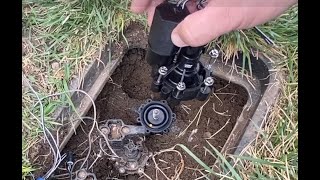
- Locate all sprinkler valve boxes on your property
- Open each valve: Turn solenoid and bleed valve counterclockwise 1/4 turn
- Set sprinkler timer to "Off" position
Important: Do not use a standard compressor with storage tank for blowing out. If you must use compressed air, reduce pressure below 60 PSI and release air slowly. Professional winterization is recommended for blowouts.
Related Guides
Related Tools
FAQ
When should I winterize my sprinkler system?
Winterize before the first hard freeze (temperatures below 28°F for several hours). Typically late October to mid-November depending on your location.
Do I need to blow out my system or just drain it?
In areas with frost depth of 18" or less, proper draining is often sufficient. Commercial systems should always be blown out. If blowouts are standard in your area, consider hiring a professional with proper equipment.
What's the flow control on the valve center?
The center stem on most valves is a flow control, not an on/off switch. It adjusts water flow through the valve. There's no need to adjust this for winterization - only turn the solenoid and bleed valve 1/4 turn counterclockwise.